


Key Takeaways
- Reassess where Herman Miller stacking chairs fit in a hybrid office: they solve a different problem than desk chairs or swivel seating by giving conference rooms, training spaces, and guest areas faster turnover and easier storage.
- Clarify the search before buying Herman Miller stacking chairs, because buyers often mix them up with task chairs, embody models, or other office chairs that aren’t built for multi-purpose room use.
- Check the practical specs on Herman Miller stacking chairs—stack height, chair weight, floor glides, and cleanability—since those details decide whether facilities staff can move, store, and maintain them without daily friction.
- Match comfort to duration by choosing stacking chairs for one-hour meetings, guest seating, and touchdown zones, while reserving more adjustable office seating for all-day desk work and longer training sessions.
- Compare new, open-box, and certified pre-owned Herman Miller chairs with a total-cost mindset, because the right buy isn’t just about ticket price; it’s about lifespan, maintenance, and whether the chair can handle repeated room resets.
- Standardize key details before a multi-chair order—finish, glide type, upholstery, and use case—so Herman Miller stacking chairs look consistent across spaces and don’t create avoidable facility headaches later.
Conference rooms are shrinking, calendars are less predictable, and the old rule of one room, one setup, one purpose is breaking down fast. That shift is exactly why herman miller stacking chairs are back in serious buying conversations—not as design trophies, but as practical tools for hybrid offices that need to reset a room in under 10 minutes. For office managers and facilities coordinators, that matters. A chair that stores cleanly, moves easily, and still looks right in a client-facing space solves three problems at once.
And here’s the part most teams miss: stacking seating used to be treated like the backup plan, the extra chairs rolled in only when attendance spiked. Not anymore. In practice, flexible training rooms, touchdown zones, and guest areas now demand seating that can shift with the day—without looking cheap or wearing out after a year of daily handling. Design names still carry weight (yes, people notice), but durability, stack height, floor protection, and cleanability are what decide whether a chair earns its footprint. That’s where the current interest is coming from.
Why Herman Miller stacking chairs matter again in hybrid office planning
Hybrid offices have made fixed seating a space problem.
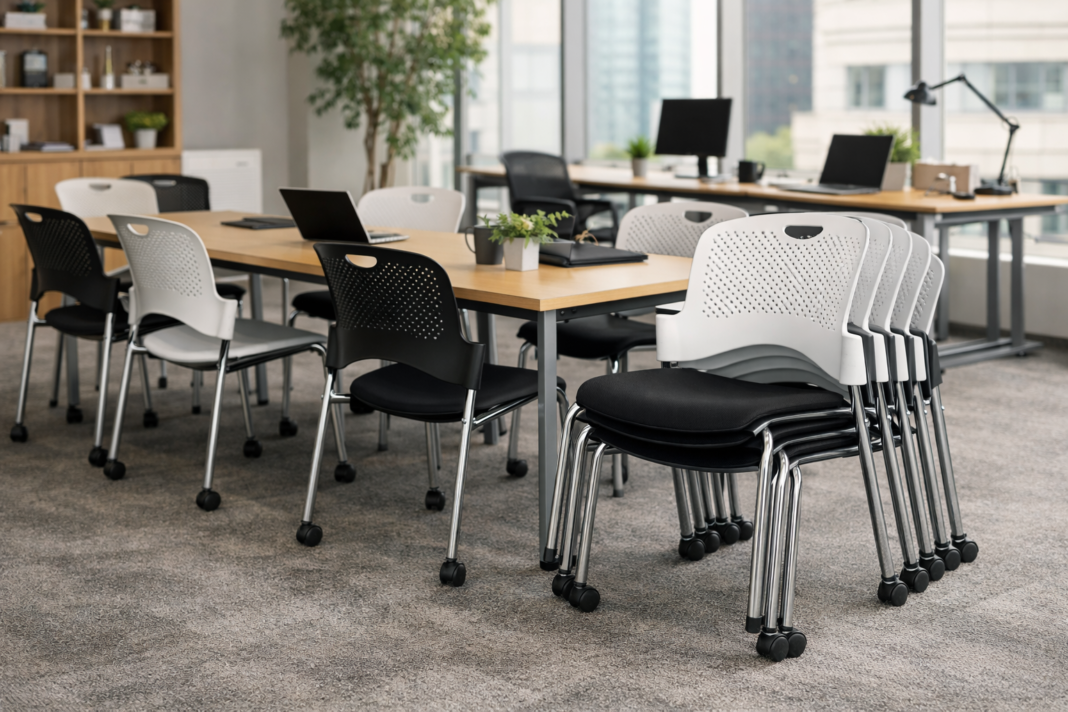
- Rooms now change jobs faster. A boardroom at 9 a.m. becomes a training room by noon, then a town-hall setup after lunch. In that kind of office planning, Herman Miller Caper stacking chair options make sense because they store cleanly, roll out fast, and don’t leave facilities teams wrestling with heavy wooden or hanging seating that was picked for looks, not movement.
- Attendance is less predictable. With hybrid schedules, office managers can’t size every room for five full days of use. That’s why herman miller stacking chairs are showing up again in flex spaces where 8 seats one day and 24 the next is normal.
- Storage matters now. Bulky fixed chairs eat square footage, and that’s expensive. Stackable Herman Miller guest chairs give teams a practical middle ground between permanent guest seating and rolling swivel setups around a desk.
How hybrid schedules changed conference room and training room furniture needs
Conference rooms changed first. The honest answer is that fewer companies want one layout locked in all quarter long. Herman Miller meeting room chairs work better in training rooms, touchdown spaces, and overflow sessions because they can be reset in minutes—not an hour.
Why office managers are moving away from bulky fixed seating
Some chairs still look impressive. They just don’t earn their footprint. In practice, the Caper chair by Herman Miller fits the current company mindset: lighter, easier to clean, easier to move, and a better view of what the room actually needs that day.
Where stacking chairs fit between guest chairs, swivel chairs, and desk seating
Not every chair should swivel. Not every guest chair should stack, either. But for meeting overflow, training days, and multi-use rooms—especially where teams are balancing budget, layout changes, and daily resets—herman miller stacking chairs fill the gap cleanly.
What office managers actually mean when they search for Herman Miller stacking chairs
Here’s the counterintuitive part: most buyers searching herman miller stacking chairs aren’t shopping for executive seating at all—they’re trying to solve a space problem. In practice, that search usually comes from office managers planning rooms that need to flip fast, from training layout to guest seating to overflow meeting space, without dragging in bulky swivel chairs or fixed desk seating.
The search intent behind herman miller stacking chairs and what buyers want to compare
What they want is pretty specific. They’re comparing footprint, weight, cleanability, and whether a chair still looks credible next to higher-end office furniture. The honest answer is that buyers often land on the Herman Miller Caper stacking chair because it covers the basics—light frame, easy handling, and a look that doesn’t feel like cafeteria furniture.
Common confusion between stacking chairs, office chairs, embody models, and other herman miller seating
Confusion is common. Searchers mix up stacking chairs with task chairs like the Embody, or assume any Herman Miller chair belongs at a desk. It doesn’t. A Caper chair by Herman Miller is built for short-stay use, not eight-hour computer work, and that distinction matters more than brand recognition.
Which use cases suit stacking chairs best: meeting rooms, guest areas, touchdown zones, and multi-purpose spaces
Best-fit spaces are usually these:
- Meeting rooms that need extra seats on demand
- Guest areas where chairs move often
- Touchdown zones for brief laptop sessions
- Multi-purpose spaces where storage matters
For teams comparing stackable Herman Miller guest chairs, the real question isn’t style alone—it’s turnover, storage, and how often staff will reconfigure the room. That’s why Herman Miller meeting room chairs keep coming up right now.
Which Herman Miller stacking chair features deserve attention before a purchase
Small details decide whether a chair earns its floor space.
That matters more now, because hybrid offices need seats that move fast, stack cleanly, and still feel right after a full calendar of meetings. For teams comparing herman miller stacking chairs, the honest answer is to look past the brand halo and check the parts that affect daily use.
Frame, seat, and back materials: plastic, upholstered, and wooden-accent options
The first filter is material. A Herman Miller Caper stacking chair with molded seat — back works better in high-turn rooms where spills, marker smudges, and coffee drips show up every week, while upholstered versions soften the feel for guest-facing spaces. Some buyers chase wooden accents for executive settings, but in practice plastic and mesh-backed options age better under constant office traffic.
Stack height, weight, glide choices, and floor protection for daily facility use
Weight and stack height matter more than brochure language. Good stackable Herman Miller guest chairs should stack in stable columns without turning into a wrestling match for the facilities team—especially after a training room reset. Check glides closely:
- hard glides for carpet
- soft glides for hard floors
- frame contact points that won’t scar storage walls
Comfort details that matter for one-hour meetings versus all-day training sessions
Not every chair needs all-day comfort. For short meetings, flexible backs and a slight seat waterfall edge usually do the job; for longer sessions, the Caper chair by Herman Miller is often specified because it gives more movement than rigid shell chairs (and that reduces fidgeting fast). Buyers reviewing Herman Miller meeting room chairs should test seat width, back flex, and arm clearance before placing a volume order.
Cleaning, maintenance, and durability points facilities teams usually miss
Here’s what most people miss: dirt collects where the seat meets the frame. Ask how fast the chair wipes down, whether replacement glides are easy to source, and how the finish holds up after 200-plus stack cycles. That’s the difference between a smart buy and a storage-room problem.
That gap matters more than most realize.
Why the resale and design conversation is pushing Herman Miller chairs back into view
Think of it this way: office managers aren’t just shopping for seats anymore. They’re trying to solve a space problem, a budget problem, and a visual-brand problem at the same time—and that’s exactly why herman miller stacking chairs are back in the conversation.
The renewed interest in design names like George Nelson, Marcel Wanders, and Marc Newson
Part of the pull is design memory. Names like George Nelson, Marcel Wanders, and Marc Newson still carry weight in office furniture because buyers know recognizable design ages better than trendy office pieces that look dated in 18 months. In practice, that matters more now, with conference rooms doubling as training rooms, touchdown zones, and guest spaces.
How buyers compare Herman Miller with retail browsing on Amazon, Harvey Norman, and Ethan Allen
Buyers often start in the same places everyone else does—Amazon, Harvey Norman, even Ethan Allen—then realize retail browsing doesn’t answer the hard questions: Will it stack cleanly? Will it survive daily resets? Does it still look right next to a boardroom desk or swivel seating? That comparison process is pushing more teams toward stackable Herman Miller guest chairs and purpose-built Herman Miller meeting room chairs instead of generic wooden or hanging-chair-adjacent options.
Why recognizable design still matters in guest-facing office spaces
Here’s what most people miss: guest seating sends a signal fast. A Caper chair by Herman Miller or a well-kept Herman Miller Caper stacking chair tells visitors the company notices details. Short meetings. Training overflow. Waiting areas. It all counts.
Simple idea. Harder to get right than it sounds.
- Best fit: rooms that change layout 2–5 times per week
- Smart check: confirm stack height, weight, and floor protection
- Design test: ask, “Would this still look right in three years?”
How to evaluate Herman Miller stacking chairs for flexible spaces without overspending
How can a buyer tell whether herman miller stacking chairs are worth the spend for a room that changes every week? The short answer: judge them like operations equipment, not decor. In practice, office teams should compare stack height, wipe-clean surfaces, weight, and how fast staff can move 12 chairs from training layout to boardroom mode—because that labor cost adds up.
A practical checklist for conference rooms, training areas, and overflow seating
For conference rooms and overflow zones, the Herman Miller Caper stacking chair stays on shortlists because it’s light, easy to move, and built for quick reconfiguration. Buyers looking at stackable Herman Miller guest chairs should check:
- Stacking footprint: how many fit in storage without blocking egress
- Seat comfort: 45 to 90 minutes is the real test
- Floor contact: glides matter on hard surfaces
- Cleaning time: mesh and molded seats usually win
New, open-box, and certified pre-owned options office buyers are weighing right now
Price spread is usually the deciding factor.
A new Caper chair by Herman Miller may make sense for client-facing rooms, but open-box and pre-owned inventory often works better for training spaces where 20 or 30 chairs are needed at once—Madison Seating is one seller facilities teams may reference for that category.
What most facilities coordinators should standardize before placing a multi-chair order
Bluntly, inconsistency is what causes headaches later. Before ordering Herman Miller meeting room chairs, standardize three things:
It’s not the only factor, but it’s close.
- One finish color
- One glide or caster type
- One approved storage plan (even a good chair becomes clutter if nobody planned the stack zone)
That approach works better. It keeps reorder decisions fast, rooms cleaner, and flexible spaces actually flexible.
Frequently Asked Questions
Are Herman Miller stacking chairs good for conference rooms and training spaces?
Yes—if the room needs chairs that can be moved, nested, or stored without turning setup into a full facilities project. The better Herman Miller stacking chairs are built for repeat use, so they hold up in meeting rooms, breakout spaces, and training areas where chairs get dragged, re-stacked, and reconfigured all week.
What makes Herman Miller stacking chairs different from regular office chairs?
A stacking chair is made for flexible shared spaces, not eight hours at a desk. A typical office chair has a swivel base, casters, and more adjustments; stacking chairs focus on lighter weight, easier storage, cleaner lines, and faster room resets. That’s the real distinction.
Can Herman Miller stacking chairs be used for long meetings?
They can, but model choice matters. For a 30-minute touchpoint, almost any well-made stacking chair works; for two-hour board meetings or half-day training sessions, buyers should look for contoured backs, a bit of flex, and arm options if the room layout allows it. In practice, comfort drops fast when a chair looks great but ignores posture.
Are Herman Miller stacking chairs worth the price?
For high-use spaces, usually yes. Cheap stacking chairs often wobble after a year or two, the finish starts to look rough, and the stack height becomes awkward—then the room feels tired before the carpet does. Paying more upfront for better design and durability tends to work better for office managers tracking replacement cycles, not just invoice totals.
How many Herman Miller stacking chairs can usually be stacked together?
It depends on the specific chair, frame, and whether it has arms or an upholstered seat, so the manufacturer’s product sheet matters here. Most commercial stacking chairs have a stated stack limit for floor stacking and sometimes a different limit for chair carts. Ignore that number and storage gets messy fast.
That gap matters more than most realize.
Are Herman Miller stacking chairs a better choice than swivel guest chairs?
For flexible rooms, yes. A swivel guest chair makes sense in a private office or a fixed visitor station, but it takes up more visual space and doesn’t help when a training room needs to flip from classroom layout to open floor in ten minutes. That’s where stacking wins—less fuss, less storage strain, fewer headaches for facilities.
Do Herman Miller stacking chairs come in wood, plastic, or upholstered options?
Across commercial seating lines, buyers will usually see a mix of molded shells, upholstered seats, and sometimes wooden or veneer-forward looks depending on the design family. That matters because materials change maintenance, acoustics, and first impressions. A plastic shell cleans fast; upholstered chairs feel softer in longer meetings; wood reads warmer in guest-facing spaces.
What should facilities teams check before buying Herman Miller stacking chairs online?
Start with four things: actual dimensions, stack height, weight per chair, and whether glides match the floor surface. Then check the seat width, arm clearance, and cart compatibility—small details, but they’re the ones that trip up installs. One expert at Madison Seating often makes the same point: a chair can look perfect on screen and still fail the room if storage and circulation weren’t measured first.
Are stacking chairs still a smart buy for modern office design?
Absolutely. The push toward flexible office layouts hasn’t gone away; if anything, it’s made stacking chairs more useful because one room now has to handle interviews, team huddles, training, and guest overflow. Good stacking chairs don’t look like leftovers anymore—and that’s a big shift.
Simple idea. Harder to get right than it sounds.
How do buyers compare Herman Miller stacking chairs with options sold through big retail sites like Amazon or furniture chains?
By getting past the photos. Compare frame warranty, stackability, replacement part availability, weight rating, finish durability, and whether the chair is actually built for commercial office use rather than light residential use. Names floating around online—Amazon listings, designer references, even search noise tied to Michael, George, Scott, Jack, John, Kevin, Evan, Todd, Adam, Jake, Frank, Mike, Mark, Marc, Marcel, McKay, Newson, Wanders, Harvey Norman, Ethan Allen, Smithsonian, or Embody—don’t tell a facilities team what matters on install day.
The renewed interest in herman miller stacking chairs isn’t really about nostalgia. It’s about pressure. Hybrid offices now need rooms that can shift from a six-person team meeting to a 20-seat training setup by the afternoon, and furniture that can’t move with that rhythm becomes dead weight fast. That’s why office managers are paying closer attention to stack height, chair weight, floor protection, and cleanability—not just how a chair looks in a product photo.
There’s also a sharper buying standard now. Facilities teams aren’t just asking whether a chair is well designed; they’re asking whether it can survive daily resets, fit guest-facing spaces, and stay comfortable past the 20-minute mark. And with more buyers comparing new, open-box, and certified pre-owned inventory, the smartest purchases tend to come from clear standards set before the order goes out—not after chairs start arriving.
So the next step is simple: audit every conference room, training space, and overflow area by function, count how often layouts change in a typical month, and build a short specification list before requesting pricing. That process works better—and it prevents an expensive seating mismatch.
For more great reading, visit our site and explore related topics.